My Role
Timeline
Tools
Team
Nhi Vo (Lead Designer)
Daniel Nguyen (Lead Developer)
Justine Laderer (Lead UX Researcher, survey)
Benjamin Kiriko (Lead UX Researcher, other)
From fuel app to loyalty ecosystem
The earnify app marks BP's evolution from a purely fuel-focused platform, formerly “bpme,” into a loyalty ecosystem connecting fuel and convenience store offerings. Operating across 7,000 locations with 1.5 million users, earnify aims to transform routine gas station visits into engaging retail experiences.
The design challenge centers on using the app's points-based loyalty system to convert fuel customers into convenience store shoppers, supporting BP's broader strategy of creating seamless digital experiences across fuel and in-store purchases.
7,000
BP locations operating on earnify
1.5M
Active earnify users
200+
Users surveyed on fueling & shopping habits
Fuel customers aren't becoming shoppers
The primary challenge lies in the missed opportunity to convert fuel customers into convenience store shoppers. Although earnify has successfully transitioned a substantial user base from the legacy app, customers continue to view BP locations mainly as fuel stops rather than complete retail destinations. This mindset creates several key challenges:
Bridging the pump and the shelf
Our solution redesigns the earnify app to bridge the gap between fuel and convenience purchases by creating a more integrated, personalized, and rewarding experience. The redesign focuses on:
Contextual journey
We're reimagining the app flow to guide users naturally from fuel purchases to relevant in-store opportunities. The interface anticipates customer needs based on time of day, purchase history, and location.
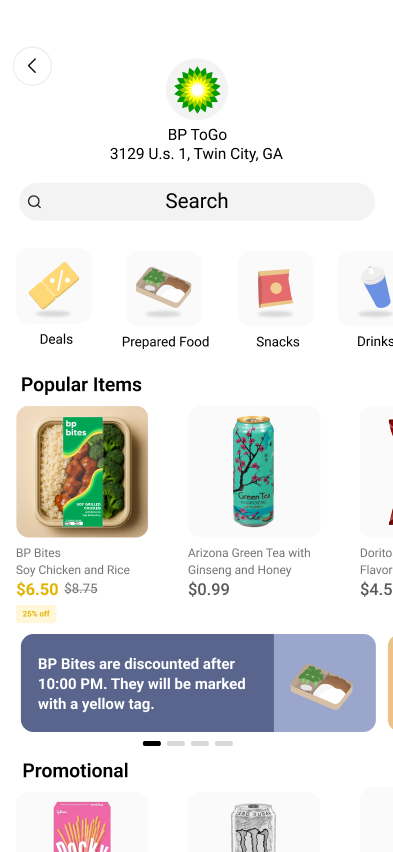
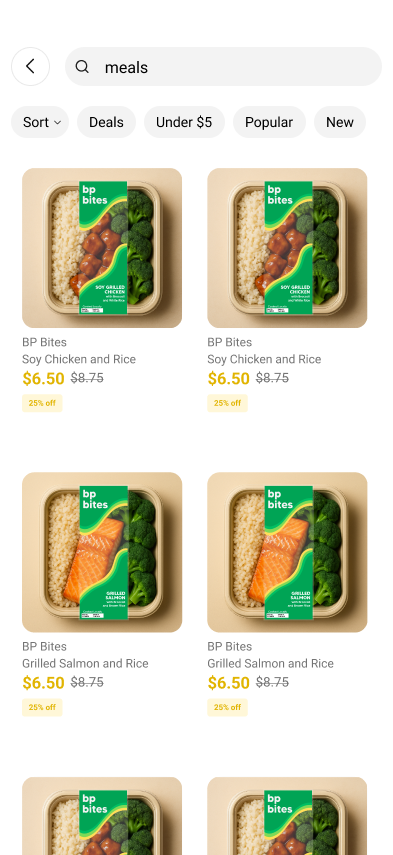
Fresh meal visibility
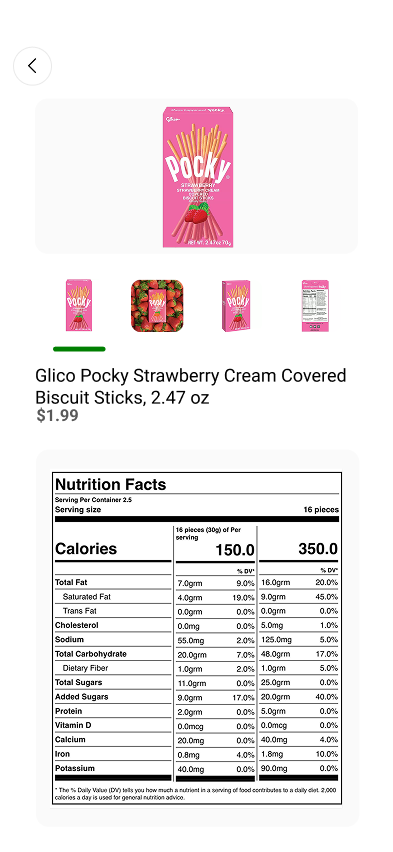
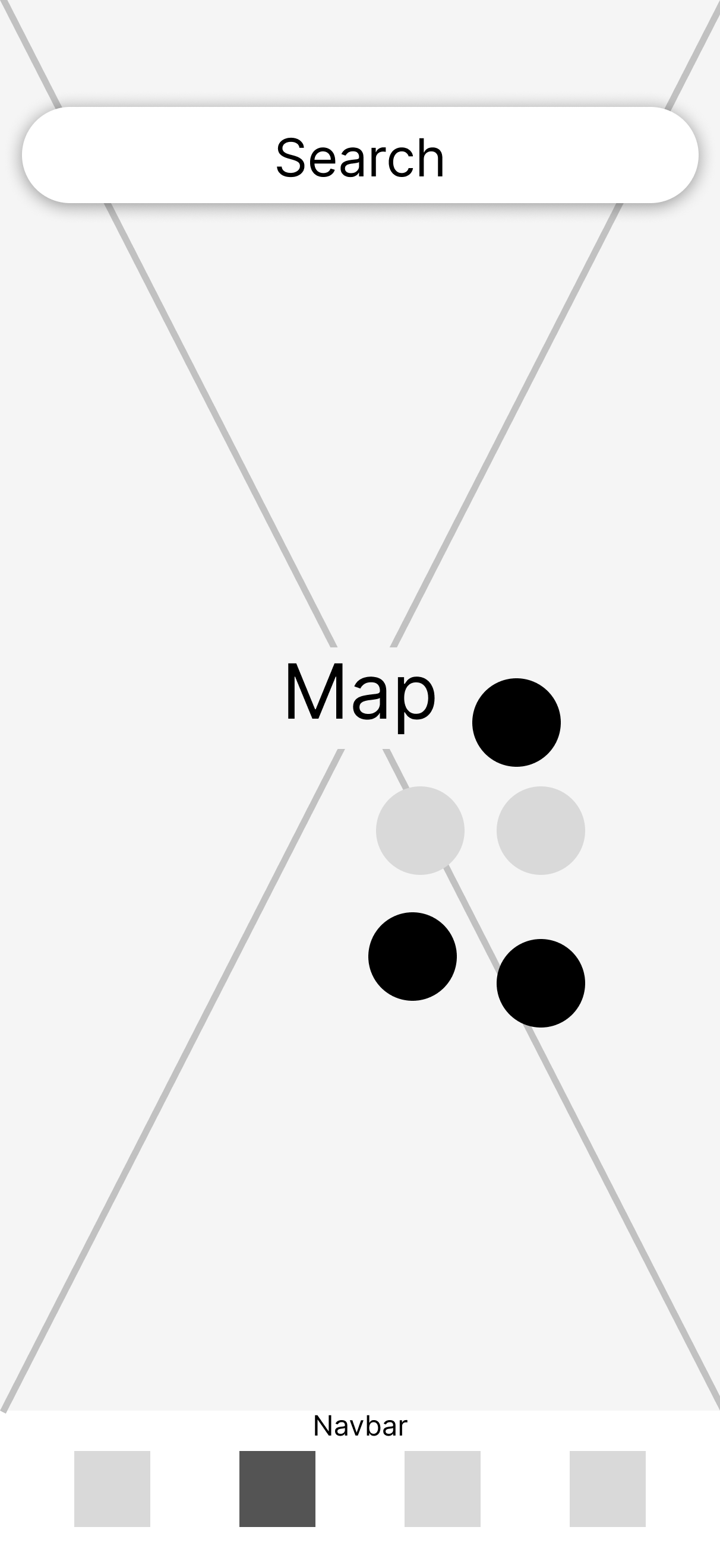
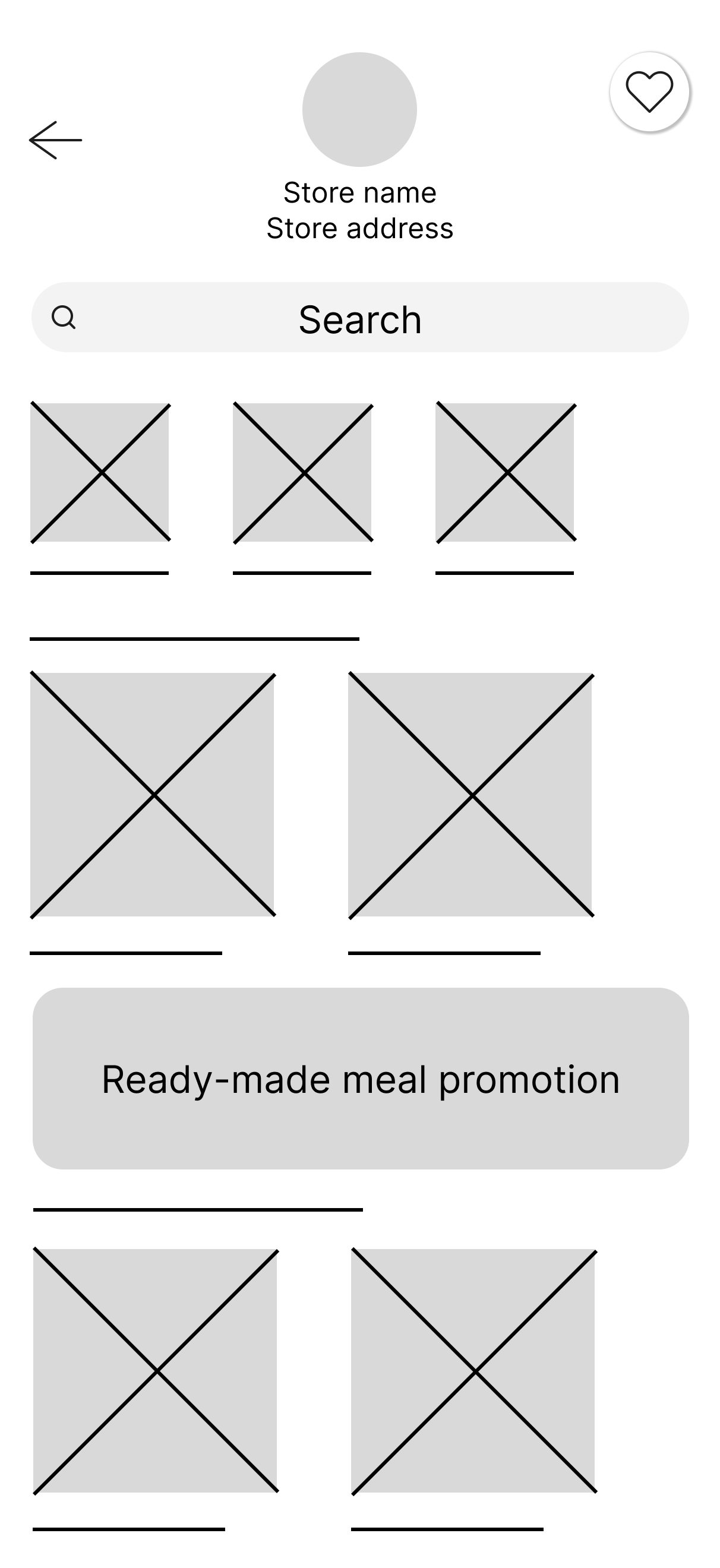
The redesigned app highlights a curated selection of fresh prepared meals available at each location, with real-time inventory updates and nutritional information to help busy customers make quick, healthy choices during their evening commute.
Store exploration
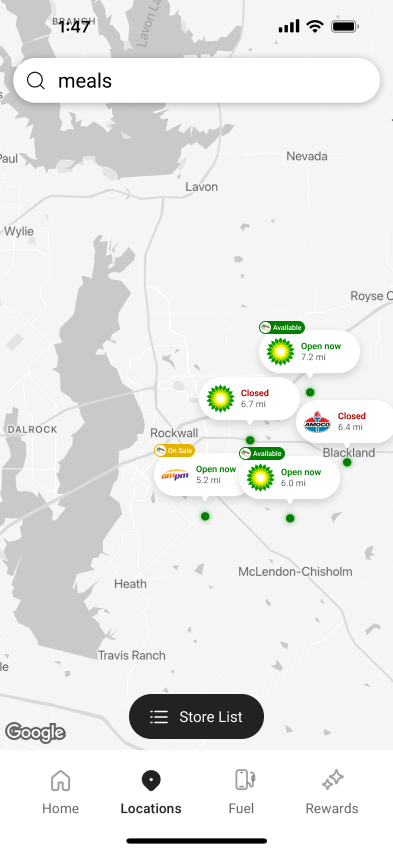
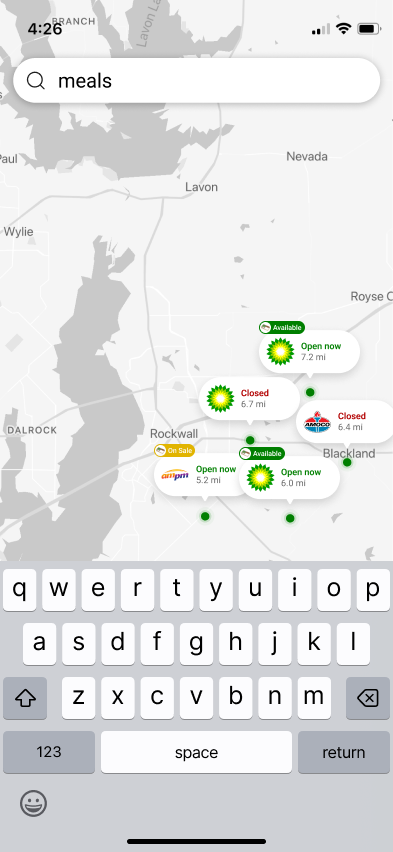
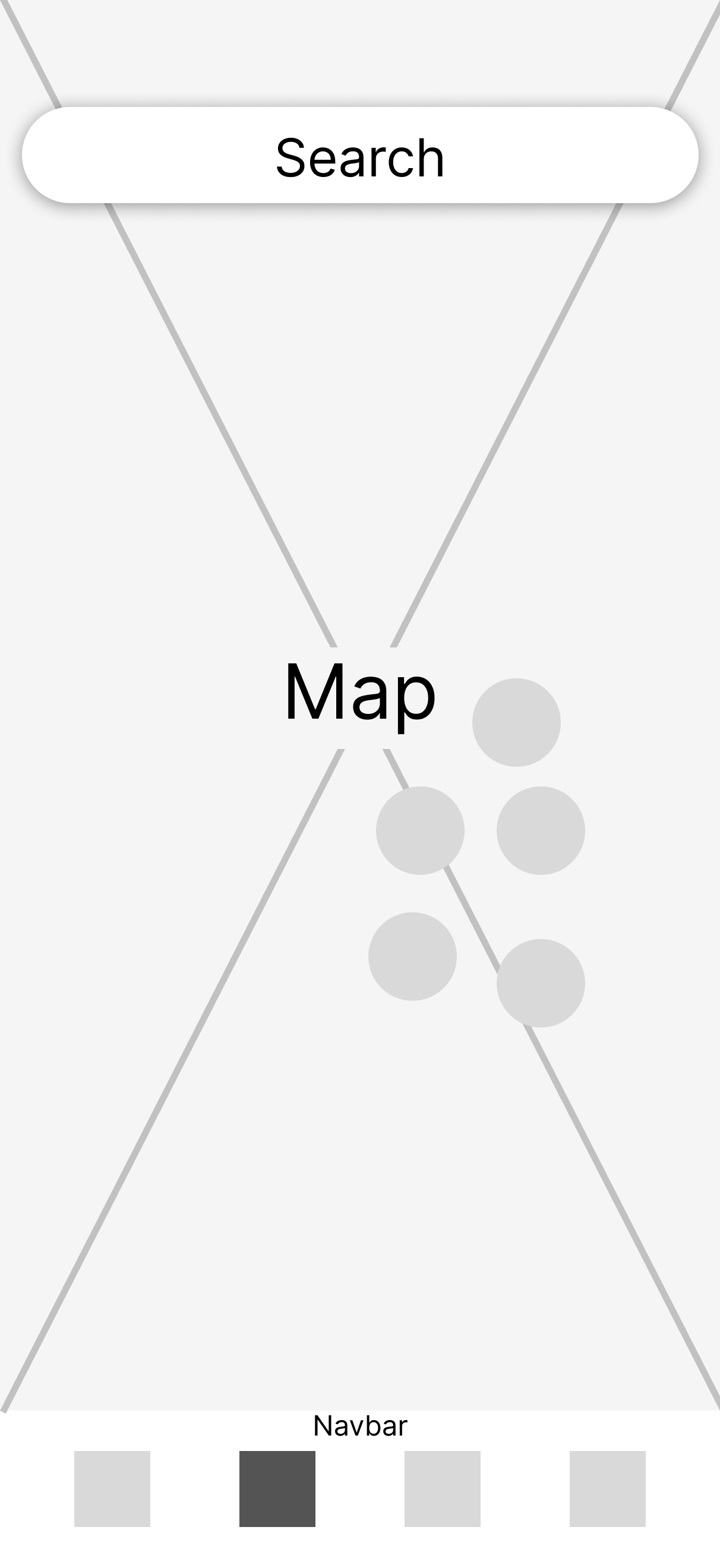
A search feature lets customers virtually browse convenience store inventory from anywhere, with personalized filters highlighting relevant products based on past purchases and preferences.
Seamless digital-physical connection
Location-aware features activate as customers approach or fuel at BP locations, offering timely incentives and highlighting in-store value before departure. This creates a smooth connection between digital interactions and physical store visits.
The enhanced app experience doesn't merely promote in-store visits, it reframes how customers view their relationship with BP, transforming simple transactions into meaningful engagement across both fuel and convenience offerings.
Understanding the forecourt customer
After understanding BP's needs and expectations, my group conducted extensive research to gain deeper insights into customer behaviors and pain points at BP stations. We combined quantitative data analysis with qualitative interviews, surveying over 200 earnify users about their fueling and convenience store habits.
Our comprehensive research approach combined surveys, interviews, and behavioral analysis to understand the dynamics between fueling visits and convenience store engagement.
Customer behavior patterns
Our survey data revealed distinct temporal patterns in convenience store visits, with peak engagement occurring between 5pm and 11pm. However, despite this evening activity window, most customers reported entering the store only about once a month, highlighting a significant opportunity gap between fueling frequency and in-store conversion rates.
5–11pm
Peak convenience-store visit window
~1×/mo
Typical in-store visit frequency
When analyzing purchase motivations, two primary factors emerged as powerful incentives:
Reward integration
Customers expressed heightened interest in products that contributed back to their fuel points, suggesting an untapped potential for circular reward mechanisms.
Fresh options appeal
A surprising preference for fresh fruits and produce indicated that conventional convenience store product assumptions may be limiting engagement.
Qualitative insights
Through in-depth interviews, we uncovered critical barriers to more frequent convenience store visits:
Selection limitations
Participants consistently expressed a preference for shopping at locations with diverse options, with many bypassing convenience stores entirely except when needing fuel.
Competitive disadvantage
Store chains with expanded food selections were capturing potential BP customers seeking more substantial options.
Physical purchase preference
Despite digital trends, our interviewees maintained a strong preference for in-person food purchases rather than delivery services.
12%
increase in digital purchases is expected through 2030 as in-store visits continue to decline
42%
of survey participants are more likely to enter convenience stores at 5:00PM – 11:00PM
65%
of Gen Z consumers prefer simple packaging for their products, and 58% value eco-friendly packaging
Challenge identification
BP currently faces several key challenges that limit customer experience and engagement with their convenience stores. Many customers only visit BP stores for fueling their cars. Our goal is to increase customer engagement with BP stores by providing them with more options to choose from.
Problem statement
“Customers who are hungry late at night need budget-friendly dining options that provide both nourishment and value after long, exhausting workdays.”
From flow to interface
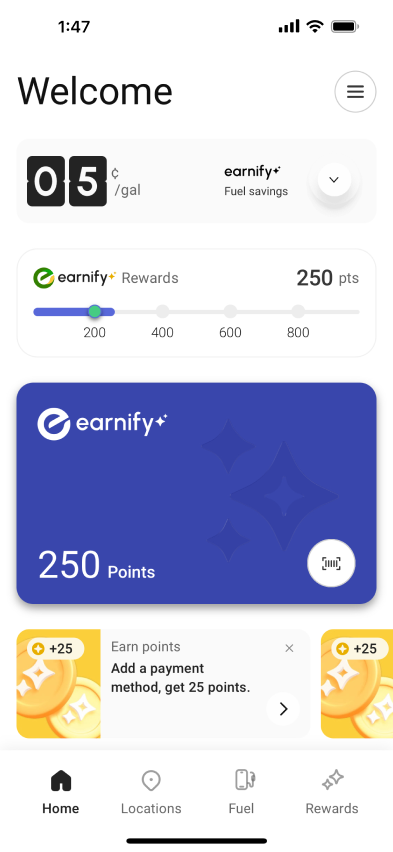
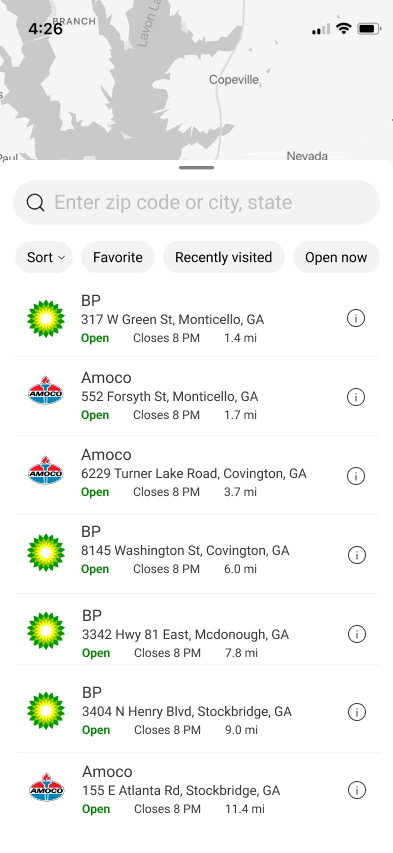
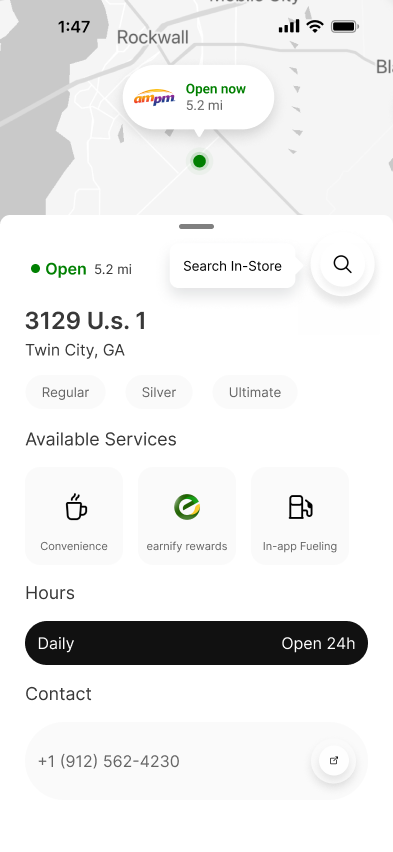
These wireframes showcase our solution's key features, focusing on enhancing the in-store discovery experience. The design maintains earnify's existing navigation structure while introducing new features that connect fuel visits to meaningful in-store engagement opportunities.

.png)
Play with the prototype
Future improvements
Our redesigned earnify app addresses the core challenge, but we still have a bunch of improvements to make:
Enhanced personalization
Future iterations could leverage machine learning for more personalized recommendations that evolve with customer behavior.
Expanded payment integration
Adding additional payment options and subscription models would provide greater convenience and potentially unlock new value propositions.
In-store navigation
Indoor mapping technology could guide customers directly to promoted items, solving the findability challenge for first-time store visitors.
Cross-partner ecosystem
Strategic partnerships with service providers would transform earnify into a more comprehensive platform.
Sustainability features
Rewarding environmentally conscious behaviors would align with younger demographics' values while supporting BP's broader corporate initiatives.
What I learned
Through this earnify redesign, I gained valuable insights into effectively balancing business objectives with genuine user needs. I developed a deeper appreciation for research approaches that revealed not just what customers were doing, but why they were making these choices, which is crucial information for creating meaningful solutions.
Working with my cross-functional team enhanced my ability to communicate concepts to diverse audiences, a skill that will serve me well throughout my career. The project also reinforced my belief that the most successful digital experiences are those that seamlessly bridge physical and digital interactions while providing clear value to both users and businesses.
Back to all projects